Yunomine Onsen
Historic geothermal onsen in Wakayama, Japan, closely tied to the Kumano Kodo pilgrimage and home to Tsuboyu, a tiny private rock bath associated with the UNESCO World Heritage pilgrimage landscape.
Yunomine Onsen is one of Japan’s most historically important hot-spring villages. Tucked into a narrow valley in the Kumano region of Wakayama Prefecture, it has been associated with geothermal bathing and the Kumano pilgrimage tradition for centuries.
The village is especially famous for Tsuboyu, a tiny stone-lined private bath beside the creek. Tsuboyu is closely connected with the UNESCO World Heritage-listed Sacred Sites and Pilgrimage Routes in the Kii Mountain Range. Official Wakayama tourism describes it as the only World Heritage site where visitors can enjoy full-body hot-spring bathing.
Yunomine is not a wild hot spring in the modern sense. The geothermal water is natural, but the village has public baths, inns, guesthouses and a long-established bathing culture. For NHSNM, the most accurate description is a historic developed onsen supplied by natural geothermal water.
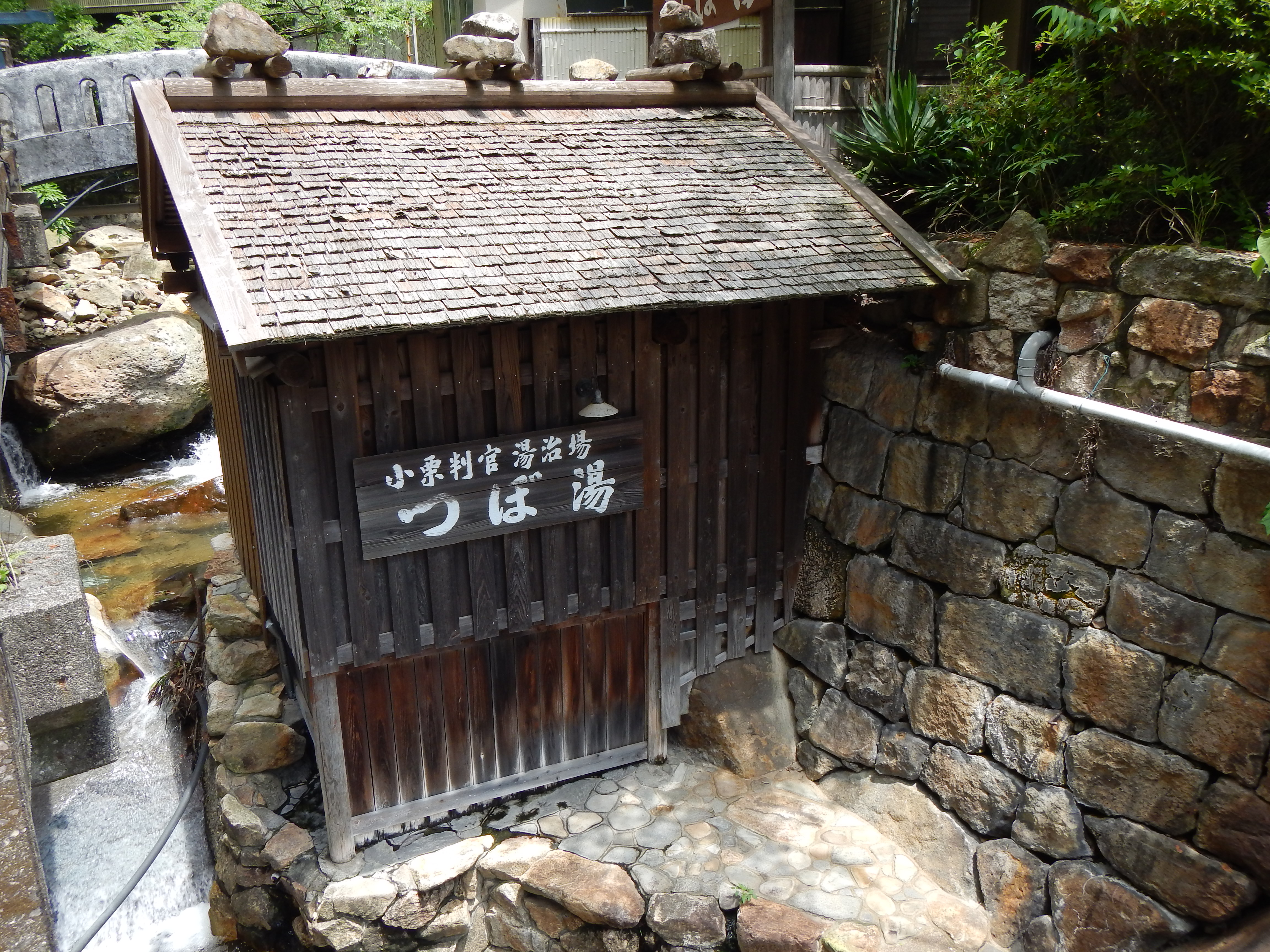
Tsuboyu at Yunomine Onsen. Photo: Nekosuki / Wikimedia Commons, licensed under CC BY-SA 4.0.
Quick Facts
- Location: Yunomine, Hongu, Tanabe, Wakayama Prefecture, Japan
- Nearest hub: Kumano Hongu Taisha / Hongu
- Spring type: Natural geothermal spring developed as a historic onsen village
- Famous bath: Tsuboyu
- Tsuboyu capacity: 1–2 people
- Tsuboyu bathing time: Up to 30 minutes
- Reservations: No; first come, first served
- Current Tsuboyu price: ¥800 adult / ¥400 child under 12
- Current Tsuboyu hours: 6:00–21:00, with reception closing at 20:30
- Open: Year-round, subject to operational changes
- Swimsuits: Not permitted in Tsuboyu
- Soap and shampoo: Not permitted in Tsuboyu
- World Heritage connection: Part of the Kumano pilgrimage cultural landscape associated with the UNESCO-listed Sacred Sites and Pilgrimage Routes in the Kii Mountain Range
- Historic role: Bathing and purification stop for Kumano pilgrims
- Nearby pilgrimage route: Dainichi-goe section of the Kumano Kodo
Why Visit
Yunomine Onsen is not simply a place to get into hot water.
It is a place where geothermal bathing, pilgrimage, religion and village life have been intertwined for centuries.
Tanabe City Kumano Tourism Bureau says Yunomine was discovered about 1,800 years ago and became an important purification stop for pilgrims travelling toward Kumano Hongu Taisha. Historical sources connected to the World Heritage nomination describe Yunomine as a bathing and purification place linked to the pilgrimage route by at least the medieval period.
That history gives Yunomine a character quite different from a modern resort onsen.
Steam rises through the small valley. Inns and bathhouses line the creek. Pilgrims still pass through the village while walking sections of the Kumano Kodo. At the centre sits Tsuboyu: small, rustic and famous far beyond its physical size.
Tsuboyu — The Famous Rock Bath
Tsuboyu is a small bathhouse built beside the creek in the centre of Yunomine Onsen.
Inside is a compact stone-lined bath designed for private use by one or two people at a time.
Current Tanabe City tourism information states that each bathing session lasts up to 30 minutes. Tsuboyu operates on a first-come, first-served basis and does not accept reservations. Visitors buy a ticket and wait according to their numbered turn.
Current listed admission is:
- Adults: ¥800
- Children under 12: ¥400
Current listed hours are:
- 6:00 am–9:00 pm
- Reception closes at 8:30 pm
- Open year-round, subject to temporary closures or operational changes
No swimsuits are permitted. Soap and shampoo are also prohibited inside Tsuboyu.
A Tsuboyu ticket also currently includes one entry to either the Kusuri Medicine Bath or the general Public Bath.
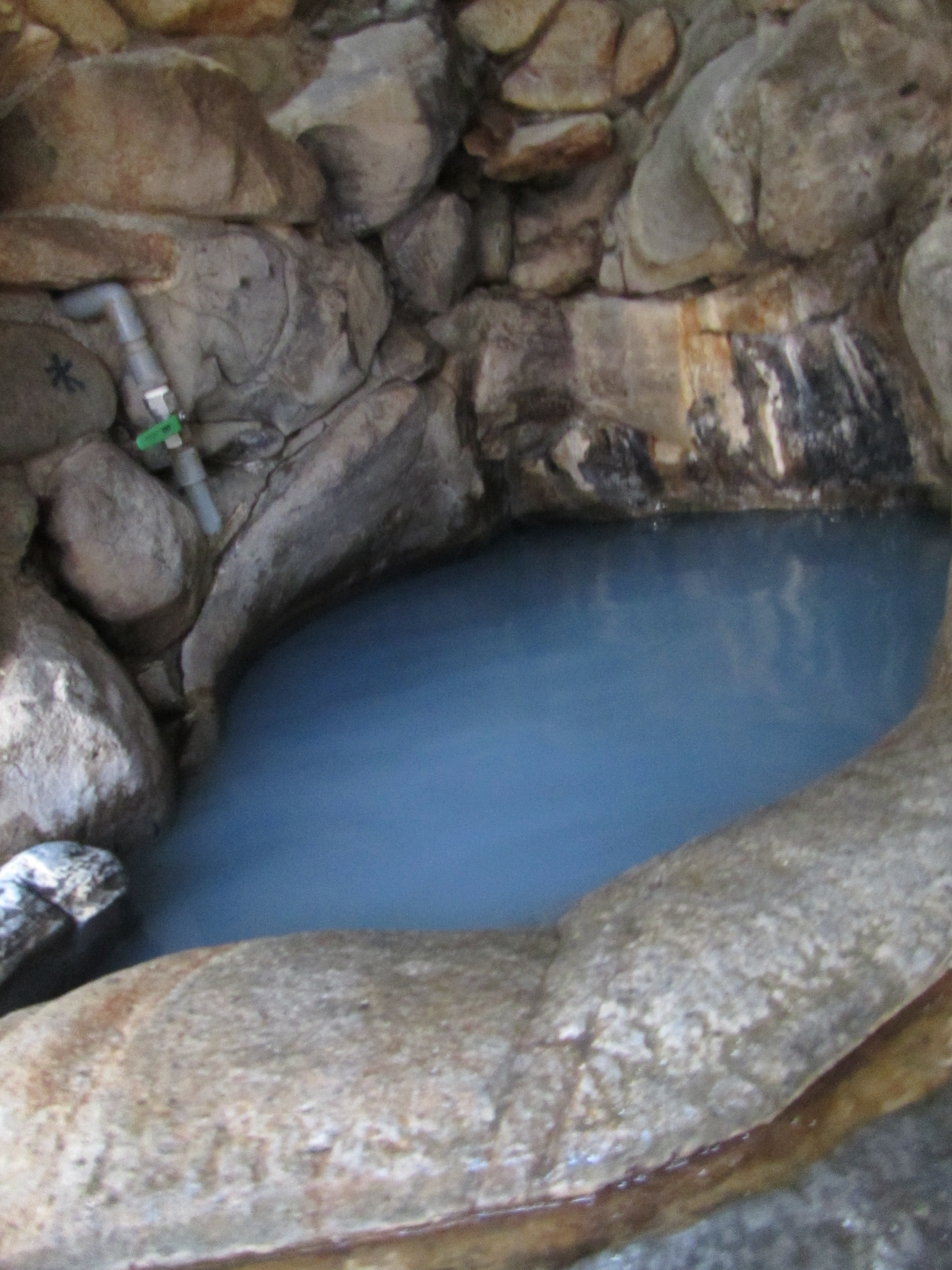
Interior of Tsuboyu. Photo: Nekosuki / Wikimedia Commons, licensed under CC BY-SA 4.0.
UNESCO World Heritage Connection
The wording around Yunomine and World Heritage deserves care.
UNESCO’s property is called Sacred Sites and Pilgrimage Routes in the Kii Mountain Range. It includes the Kumano sacred sites and the pilgrimage routes connecting them through the mountainous landscape.
UNESCO’s nomination material specifically describes Yunomine Onsen as a hot spring used for purification rites and identifies the nearby Dainichi-goe route between Kumano Hongu Taisha and Yunomine.
Official Wakayama tourism describes Tsuboyu as the only World Heritage site where visitors can enjoy full-body hot-spring bathing.
For travellers, the important point is that Tsuboyu is not simply a bathhouse that happens to be near a heritage trail. Its historical use is closely tied to the Kumano pilgrimage tradition itself.
Pilgrimage and Purification
For centuries, pilgrims travelling through Kumano used hot water as part of purification and recovery.
Tanabe City Kumano Tourism Bureau describes Yunomine as an integral part of the more-than-1,000-year-old Kumano pilgrimage tradition. Pilgrims used the mineral waters for yugori — hot-water purification — before worshipping at Kumano Hongu Taisha.
That relationship still shapes the village.
Two Kumano Kodo routes connect with Yunomine:
- Dainichi-goe
- Akagi-goe
The Dainichi-goe route links Yunomine with Kumano Hongu Taisha over a short but steep mountain section.
Water and Temperature
Yunomine is supplied by naturally heated geothermal water.
Official Wakayama tourism describes boiling spring water of around 90°C emerging at the Yuzutsu basin beside the creek. That water is hot enough for locals and visitors to cook eggs and vegetables.
This does not mean the Tsuboyu bathing water should be treated as a fixed 90°C pool.
Source temperatures and bathing temperatures are different things. The village contains several baths using geothermal water in different ways, and actual bathing conditions can vary.
Visitors should follow the instructions at each bath rather than relying on a single published source temperature.
Onsen Tamago and the Yuzutsu Basin
One of Yunomine’s most distinctive traditions happens outside the bath.
The village has a public geothermal cooking basin called Yuzutsu. Visitors commonly use the naturally hot spring water to cook eggs known as onsen tamago.
Official Wakayama tourism says the spring water at this source is around 90°C.
The Yuzutsu is a reminder that geothermal water in Yunomine is not merely recreational. It has long been integrated into everyday village life.
Do not touch or enter the cooking basin. Water at these source temperatures can cause severe burns.
Visitor Basics
- Historic geothermal onsen village in Wakayama Prefecture.
- Closely connected to the Kumano Kodo pilgrimage tradition.
- Tsuboyu is the village's most famous bath.
- Tsuboyu is private-use for one or two people for up to 30 minutes.
- No reservations; first come, first served.
- Purchase tickets at the public-bath ticket counter near Toko-ji Temple.
- No swimsuits, soap or shampoo inside Tsuboyu.
- Expect traditional Japanese bathing etiquette.
- Current operational details can change, so check the official Tanabe City Kumano Tourism Bureau information before travelling.
Public Baths
Yunomine Onsen has more bathing options than Tsuboyu alone.
Current Tanabe City tourism information lists three principal public-bath options:
- Tsuboyu — private historic stone bath.
- Kusuri Medicine Bath — public medicinal bath.
- Public Bath — general public bathing facility.
Current listed prices are:
- Tsuboyu: ¥800 adult / ¥400 child under 12.
- Kusuri Medicine Bath: ¥600 adult / ¥300 child under 12 for one entry.
- Public Bath: ¥400 adult / ¥200 child under 12.
The public baths currently operate from 6:00 am to 9:00 pm with reception closing at 8:30 pm, although cleaning closures and other operational changes can occur.
Japanese Bathing Etiquette
Yunomine is a traditional Japanese onsen destination, not a Western-style swimming-pool complex.
- Wash before entering a shared bath where washing facilities are provided.
- Do not wear swimsuits unless a facility specifically says otherwise.
- Keep towels out of the bath water.
- Do not use soap or shampoo inside Tsuboyu.
- Keep noise low and respect other bathers.
- Follow tattoo policies at individual inns or bathhouses, as rules can differ.
- Follow staff instructions and posted signs.
Tsuboyu is used privately during each 30-minute session, but the same general respect for the water, facility and waiting visitors still applies.
Access and Transport
Yunomine Onsen is located near Kumano Hongu Taisha in the Hongu area of Tanabe City.
Tanabe City Kumano Tourism Bureau states that daily buses serve the area from Kii-Tanabe, Shirahama and Shingu, with additional services around Hongu.
For drivers, the official tourism bureau says the public parking area for Yunomine Onsen is at the southern entrance to the village.
Do not assume that a traditional village lane is suitable for casual roadside parking. Use designated parking and walk into the village.
Visitors hiking the Kumano Kodo can also approach Yunomine by pilgrimage routes including Dainichi-goe and Akagi-goe.
Walking and Kumano Kodo
Yunomine is especially attractive to walkers because it is integrated into the Kumano Kodo network.
The Dainichi-goe section connects Yunomine with Kumano Hongu Taisha over approximately 1.8 kilometres. Although short, it includes steep mountain walking and should not be treated like a flat village footpath.
Trail conditions can be affected by rain, storms, maintenance and seasonal weather. Walkers should check current Kumano Kodo information, carry appropriate footwear and avoid starting a mountain route simply because the distance looks short on a map.
Where to Stay
Yunomine is a traditional onsen village with ryokan, minshuku and guesthouse accommodation.
Many lodgings have their own baths, and some offer limited day-use bathing to non-guests.
Tanabe City Kumano Tourism Bureau notes that Yunomine is a small settlement with limited dining choices, so travellers staying overnight should check meal arrangements when booking accommodation.
For pilgrims, an overnight stay can turn Yunomine from a quick bath stop into part of a slower Kumano Kodo itinerary.
Best Time to Visit
Yunomine can be visited throughout the year, but the surrounding mountain environment changes strongly with the seasons.
Spring and autumn are popular periods for Kumano Kodo walking. Summer can be hot and humid, while winter can bring colder conditions to the mountain routes.
Rain is an important consideration in the Kii Peninsula. Weather can affect walking trails, bus travel and road conditions even when the public baths themselves remain open.
Check current weather, transport and trail notices before combining Tsuboyu with a pilgrimage walk.
Nearby Attractions
- Kumano Hongu Taisha.
- Oyunohara and its giant torii gate.
- Dainichi-goe Kumano Kodo route.
- Akagi-goe Kumano Kodo route.
- Kawayu Onsen.
- Wataze / Watarase Onsen.
- Kumano Hongu Heritage Center.
Yunomine works particularly well as part of a wider Hongu and Kumano Kodo itinerary rather than as an isolated hot-spring detour.
FAQ
Is Yunomine Onsen a natural hot spring?
Yes. Yunomine uses naturally heated geothermal spring water, although the village itself is a historic developed onsen destination with bathhouses, inns and public facilities.
What is Tsuboyu?
Tsuboyu is a tiny private stone-lined hot-spring bath beside the creek in the centre of Yunomine Onsen.
Do you need a reservation for Tsuboyu?
No. Current official information says Tsuboyu is first come, first served. Visitors buy a ticket and wait according to their numbered turn.
How long can you use Tsuboyu?
Each private session is limited to 30 minutes.
How many people fit in Tsuboyu?
Official local tourism information lists the bath for one or two people.
Can you wear a swimsuit in Tsuboyu?
No. Swimsuits are not permitted.
Can you use soap or shampoo in Tsuboyu?
No. Current rules prohibit soap and shampoo inside Tsuboyu.
Is Tsuboyu part of a UNESCO World Heritage Site?
Tsuboyu is closely associated with the UNESCO World Heritage-listed Sacred Sites and Pilgrimage Routes in the Kii Mountain Range. Official Wakayama tourism describes it as the only World Heritage site where full-body hot-spring bathing is possible.
How old is Yunomine Onsen?
Local official tourism sources say Yunomine was discovered about 1,800 years ago and has a long history as a purification and bathing stop for Kumano pilgrims.
Can you walk from Yunomine to Kumano Hongu Taisha?
Yes. The Dainichi-goe section of the Kumano Kodo connects the two, but it is a steep mountain route rather than a simple flat walk.
Sources / Last Checked
Primary sources checked:
- Tanabe City Kumano Tourism Bureau — Yunomine Onsen.
- Visit Wakayama — Tsuboyu / Yunomine Onsen.
- Visit Wakayama — Yunomine Onsen.
- UNESCO World Heritage Centre — Sacred Sites and Pilgrimage Routes in the Kii Mountain Range.
- Tanabe City Kumano Tourism Bureau — Kumano Kodo history and Yunomine-oji.
Images: Tsuboyu exterior and interior photographs by Nekosuki via Wikimedia Commons, licensed under CC BY-SA 4.0.
Last checked: 29 September 2026.